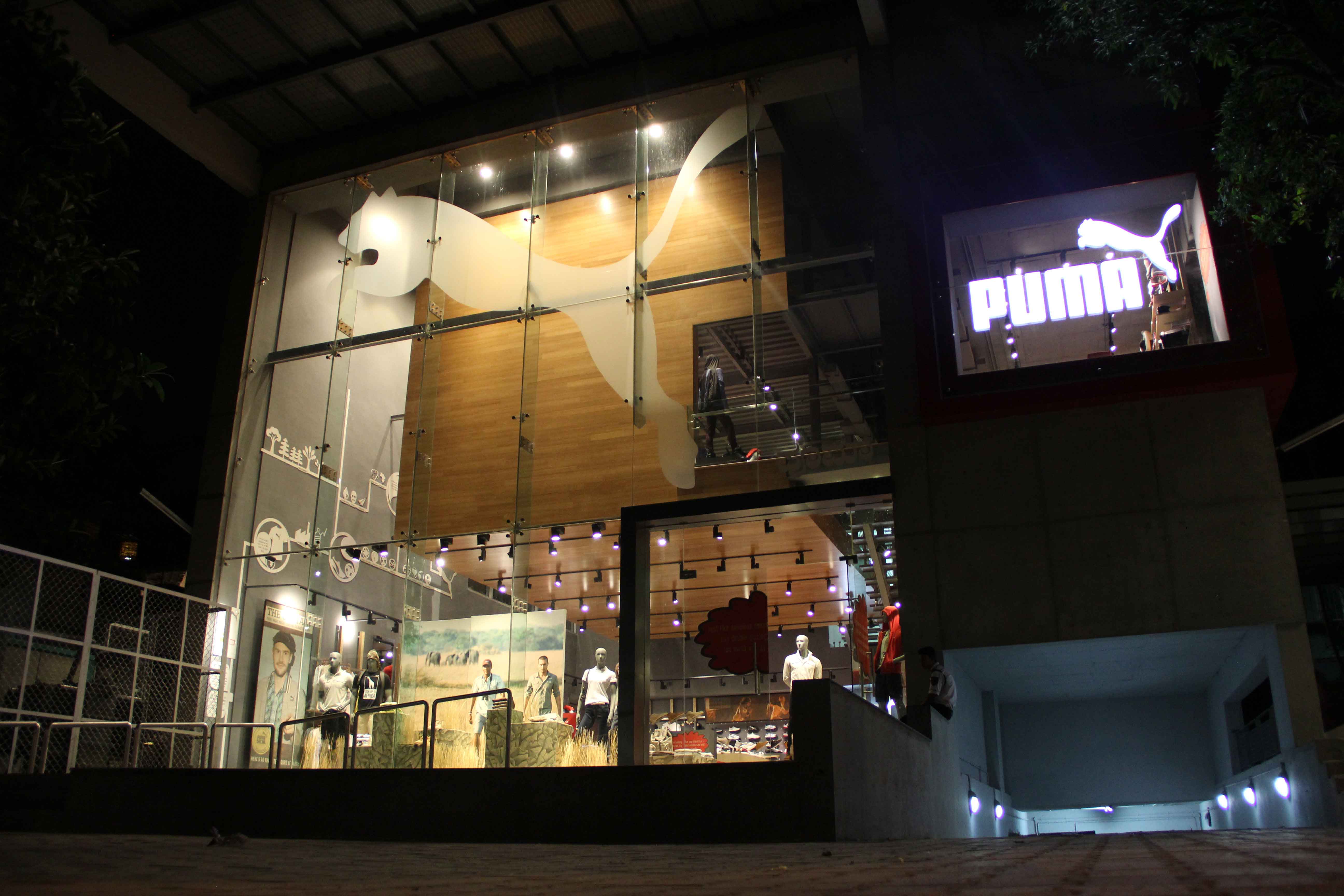
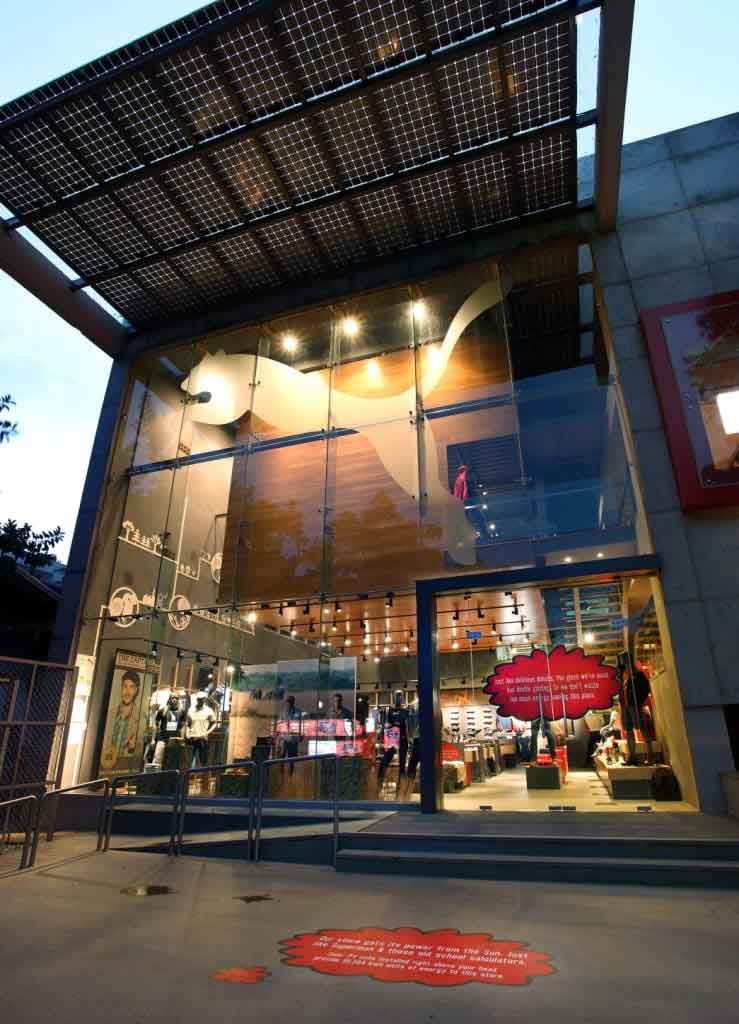
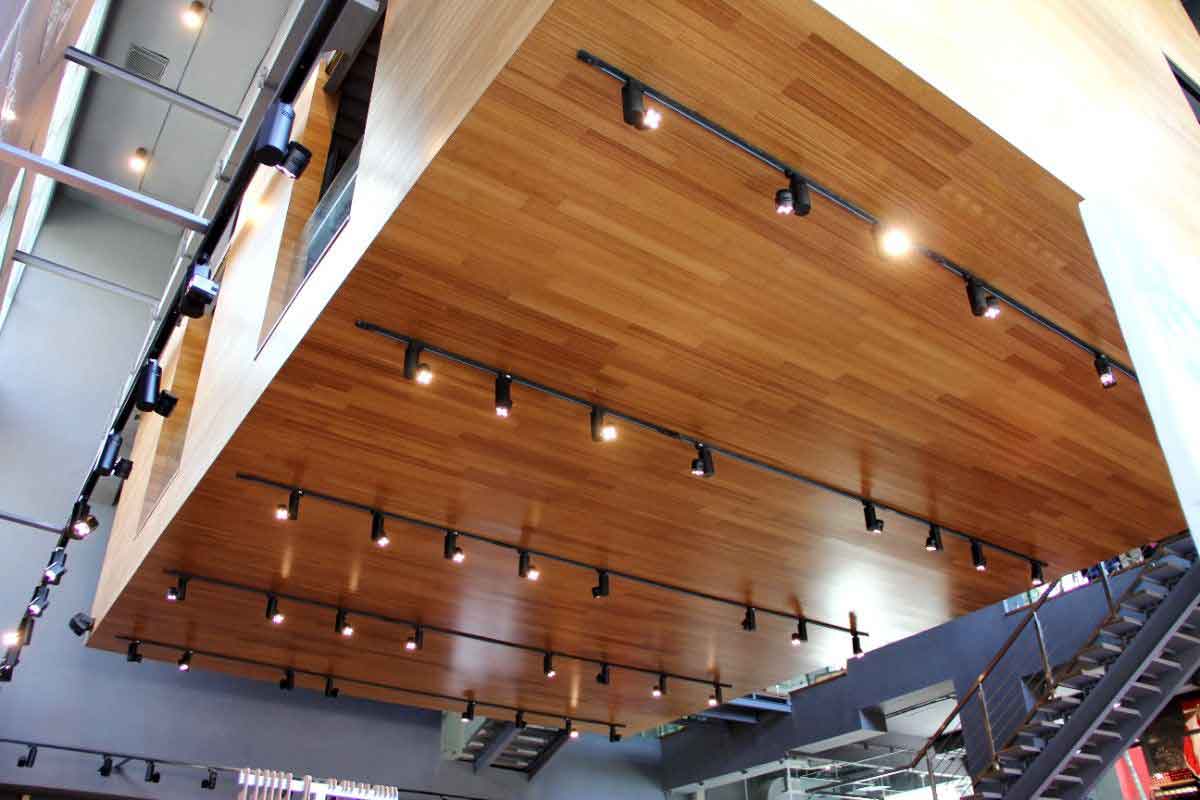
In the history of the 89 year old German multinational company The Sustainable Puma Flagship Store at Bangalore, receives a LEED PLATINUM rating and becomes the FIRST RETAIL BUILDING in India, also their first sustainable flagship store globally. The building has been designed as a simple box with clean lines and is an effort to represent global retail with a cause. A suspended two storey volume occupies a central space in the building which houses retail as well as a social club. This volume has been intentionally disconnected from the periphery so that the voids allow natural light and ventilation.


A. Specification of Materials/Systems that reduce Heat gain of building Envelope: |
1. Energy Efficient Wall:
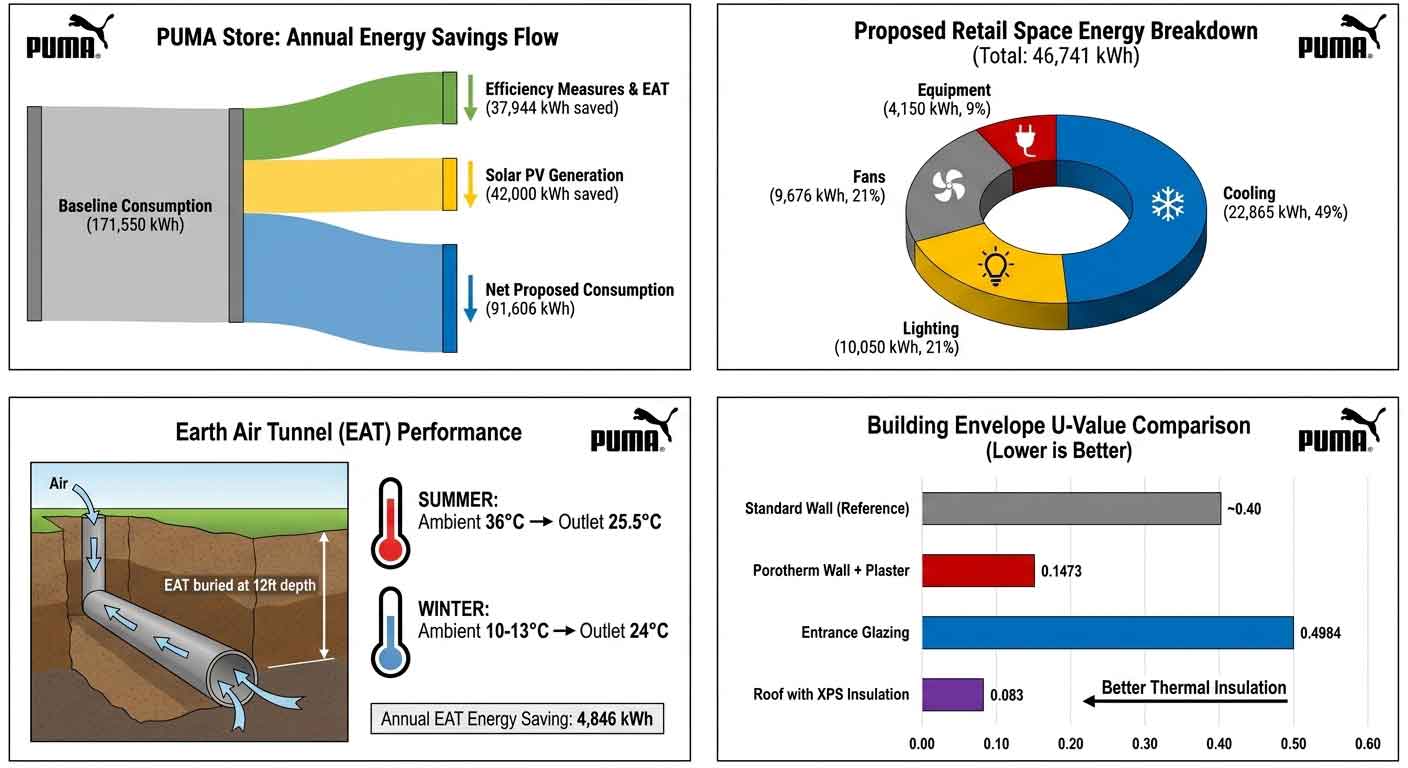
It is proposed to use 200 mm Porotherm Block wall with both sides cement plaster with a U Value of 0.1473 Btu/hr.ft2.0F for this project. The technical advantages and features of these porotherm block walls are
• Ease in handling
• Dimension stability
• Excellent thermal insulation and sound insulation
• Moisture regulating
2. Under deck Insulation on the roof :
The building roof has been provided with under deck insulation which significantly cuts down the heat gains through reduced conduction. Thermal insulation plays an important role in reducing the U value for the roof section. The building uses under deck extruded polystyrene insulation ( XPS ) with RCC slabs with an overall U-value of 0.083 Btu/hr.ft2.0F which in turn saves energy in the HVAC system.
3.High Performance Glazing :
The U value, shading coefficient and light transmittance for this glass has been selected very carefully in order to reduce the total load ( TR ) of the HVAC system and to enhance available daylight and views in the occupied space and maintain visual comfort for the occupants. Following are the specification of the glazing used in the project : U value - 0.4984 Btu / hr ft2 0F (For the entrance facades), SHGC - 0.52, VLT - 60 %, U value - 0.655 Btu / hr ft2 0F (For other facades), SHGC - 0.24, VLT - 22 %
4.Efficient Lighting Design :
ll the areas is almost 30 – 40% less than the standards specified in ASHRAE/ISENA Std 90.1 2004. The following table shows the LPD considered in various rooms of Puma Shoes building :
5.Occupancy sensors in various zones of Puma Shoes :
Occupancy sensing provides automatic on/off control so that lights are not being used when the room is unoccupied. Occupancy sensors pick up movement or sounds by occupants when the space is in use and turn the lights on. When the space is unoccupied, they turn the lights off. Since the occupancy sensors has been provided in car parking areas and toilets, the energy savings because of this energy conservation measure is very high.

5.Occupancy sensors in various zones of Puma Shoes :
Occupancy sensing provides automatic on/off control so that lights are not being used when the room is unoccupied. Occupancy sensors pick up movement or sounds by occupants when the space is in use and turn the lights on. When the space is unoccupied, they turn the lights off. Since the occupancy sensors has been provided in car parking areas and toilets, the energy savings because of this energy conservation measure is very high.
B. Hybrid Cooling System: |
B1. HVAC Specifications:
1. High Efficiency Variable Refrigerant Volume ( VRV ) systems :
The HVAC system provided for this building is Variable Refrigerant Volume ( VRV ) and energy efficient with a COP of 4.1. Some of the advantages of this systems are : Saves energy, Comfortable and economical, Low operating sound, precision room temperature control. Each zone will have Cassette / Ductable / Floor mounted type indoor unit suiting to interior requirements.
2. Increased Ventilation :
The occupants are provided with superior indoor air quality to support their health, comfort, and well being. The Outside / Fresh air has been considered 30% more compared to the minimum fresh air requirement as per ASHRAE 62.1 - 2004. This additional fresh air supply enhances the building indoor air quality and prevents the building being under ventilated at any point of time and stuffy, odorous, uncomfortable and/or unhealthy for the occupants.
3. Eco Friendly Refrigerant :
The refrigerant selected for the HVAC application for the building to minimize or eliminate the emission of compounds that contribute to ozone depletion and global warming. The base building HVAC equipment shall have only CFC & HCFC free refrigerant.
B2. Innovative Cooling Methods
1. Free Cooling in Retail spaces :
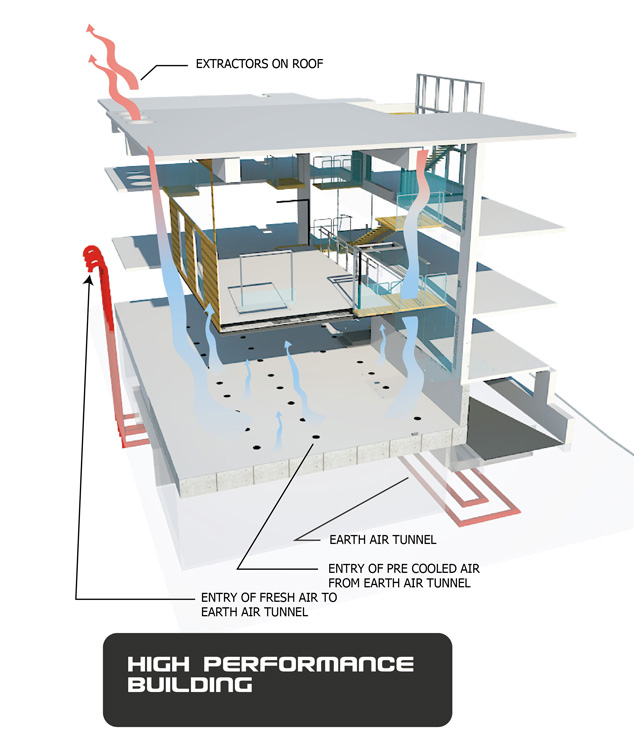
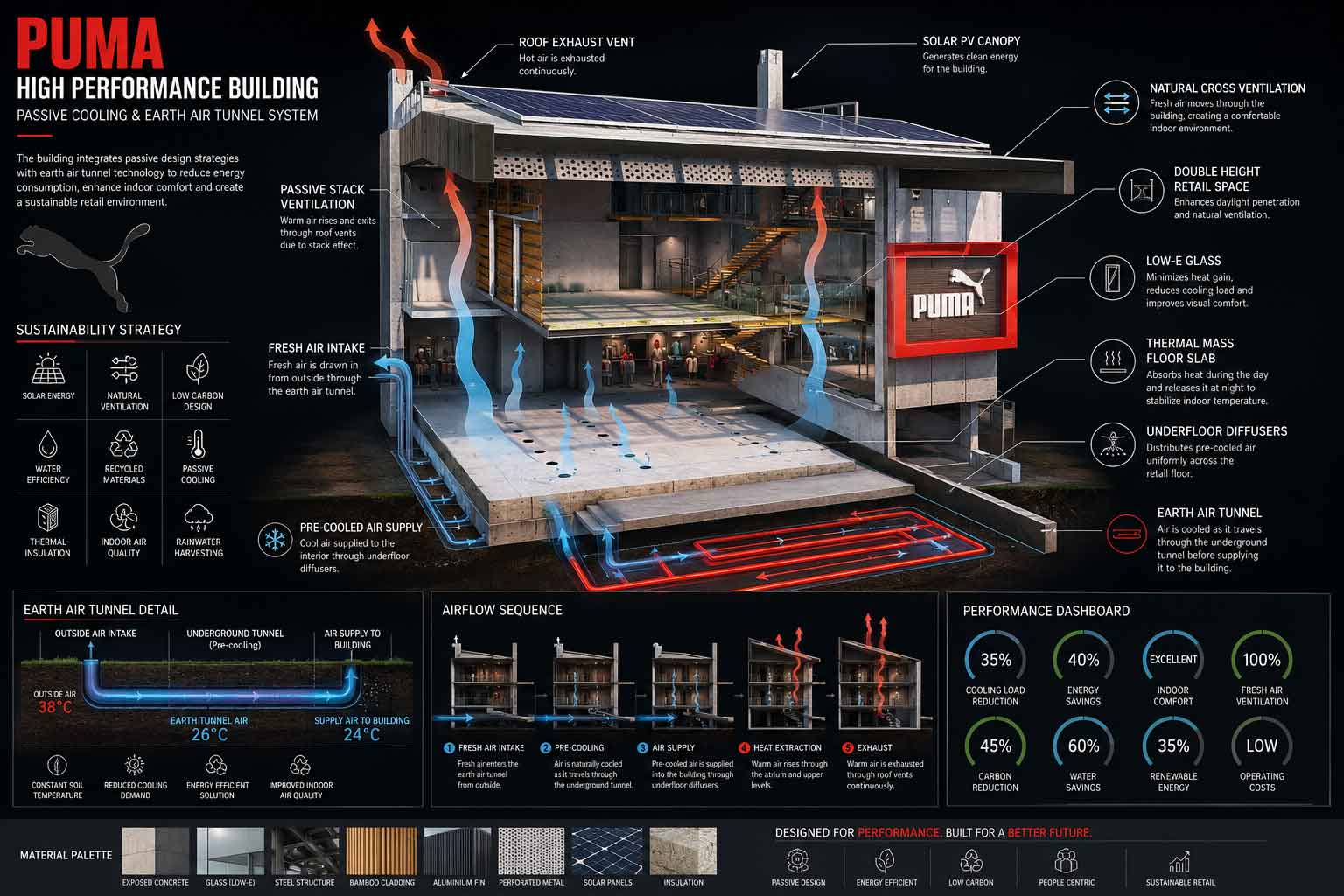
Free cooling has been considered for the retails spaces when the temperature goes 20 degrees or below, 100% fresh air will be taken in and exhausted through stack effect with extractors in the roof.
2. Earth Air Tunnel ( EAT ) for Fresh air pre cooling :
Soil temperature, at a depth of about 12 feet or more, stays fairly constant throughout the year, and is approximately equal to the average annual ambient air temperature. The ground can therefore, be used as a heat sink for cooling in the summer and as a heat source for heating in the winter. A simple method of using this concept is to pass air through an underground air tunnel. The air thus cooled or heated can be used directly at the inlet of CSU’s. In this development we are using earth air tunnel system to cool the fresh air in summer and heat the fresh air in winter/Sum time bypass during favorable ambient. This system can give an outlet temperature of 25.5⁰C at peak summer i.e when the ambient is 36 ⁰C and 24 ⁰C when the ambient is 10 to 13 ⁰C.


The system proposed for this project is as follows:
• Earth air tunnel system centrifugal Fan will have an VFD drive with VAV boxes to vary the air quantity based on the room CO2 level.
• VAV ‘s will modulate the Zone Pre Cooled Fresh Air quantity based on CO2 sensor signal.
• VFD drive will modulate the Fan motor frequency based on demand of Zone.
Note:-
1. Misc. equipments include all computers, printers, machines, plug loads, etc.
2. External equipments include lifts.
Exceptional Calculations :
In this development we are using earth air tunnel system to cool the fresh air in summer and heat the fresh air in winter/Sum time bypass during favorable ambient. This system can give an outlet temperature of 25.5*C at peak summer i.e., when the ambient is 36*C and 24*C when the ambient is 10 to 13*C. Total Earth Air Tunnel system outlet Air Quantity = 3500 CFM ( 35% more air compared to ASHRAE STD 62.1 - 2004 ). This standalone building of around 11970 sqft has a shop floor of around 5000sqft. The Ground, Mezzanine and the First Floors are for retail. The Second and the terrace floor is a Puma Social club. The parking is in the Basement.
The shop floor area in the building will be completely powered by renewable energy through solar PV panels installed on the roof. The building is built on a 90’ x60’ site in a dense commercial area with a relatively small foot print. The primary challenge was that of not enough roof area for the all the required Solar panels to fully support the energy requirements. Thus the first step was to design a highly efficient building envelope which will cut off most of the external forces that causes high energy usage and support it with many sustainable ideas which will allow us to cut down the energy requirements further.
The detailed calculation tabulated below shows the amount of energy reduction provided by earth air tunnel for pre cooling the air :
Ambient Temp |
Number of hours per day |
Number of days per month |
Number of months |
Total hours considered per year |
Assumed Outlet Temp from EAT |
TEMP Diff (Deg.F) |
Sensible cooling by EAT (Btu / h) |
Specific Power Consumption in AC @COP of 4.1 (KW/TR) |
TR | Total Power (Kwh) |
Kwh reduction by EAT for that period |
|
|||||||||||
36 |
2 | 30 | 2 | 120 | 26 | 18 | 59875 | 0.86 | 4.99 | 4.28 | 514 |
| 34 | 3 | 30 |
3 | 270 | 25 | 16.2 | 53888 | 0.86 | 4.99 | 3.85 | 1040 |
| 32 | 3 | 30 | 3 | 270 | 25 | 12.6 | 41913 | 0.86 | 3.49 | 3.00 | 809 |
| 30 | 3 | 30 | 3 | 270 | 25 | 9 | 29938 | 0.86 | 2.49 | 2.14 | 578 |
| 28 | 3 | 30 | 4 | 360 | 24 | 7.2 | 23950 | 0.86 | 2.00 | 1.71 | 616 |
| 26 | 7 | 30 | 4 | 840 | 24 | 3.6 | 11975 | 0.86 | 1.00 | 0.86 | 719 |
| 25 | 2 | 30 | 8 | 480 | 23.5 | 2.7 | 8981 | 0.86 | 0.75 | 0.64 | 308 |
| 24 | 2 | 30 | 8 | 480 | 23 | 1.8 | 5988 | 0.86 | 0.50 | 0.43 | 205 |
| 23 | 3 | 30 | 3 | 270 | 22.5 | 0.9 | 2994 | 0.86 | 0.25 | 0.21 | 58 |
| Total Energy Consumption reduction because of EAT | 4846 | ||||||||||
Energy Consumption – Base building vs Proposed building
So we have reduced the energy consumption reduction because of EAT in cooling load of overall savings and the revised energy consumption details are as follows :
Summary:
| Total Energy consumption | : 46741 kWh / Annum |
| Total Energy consumption reduction because of EAT | : 4846 kWh / Annum |
| Total Energy consumption | : 41895 kWh / Annum |
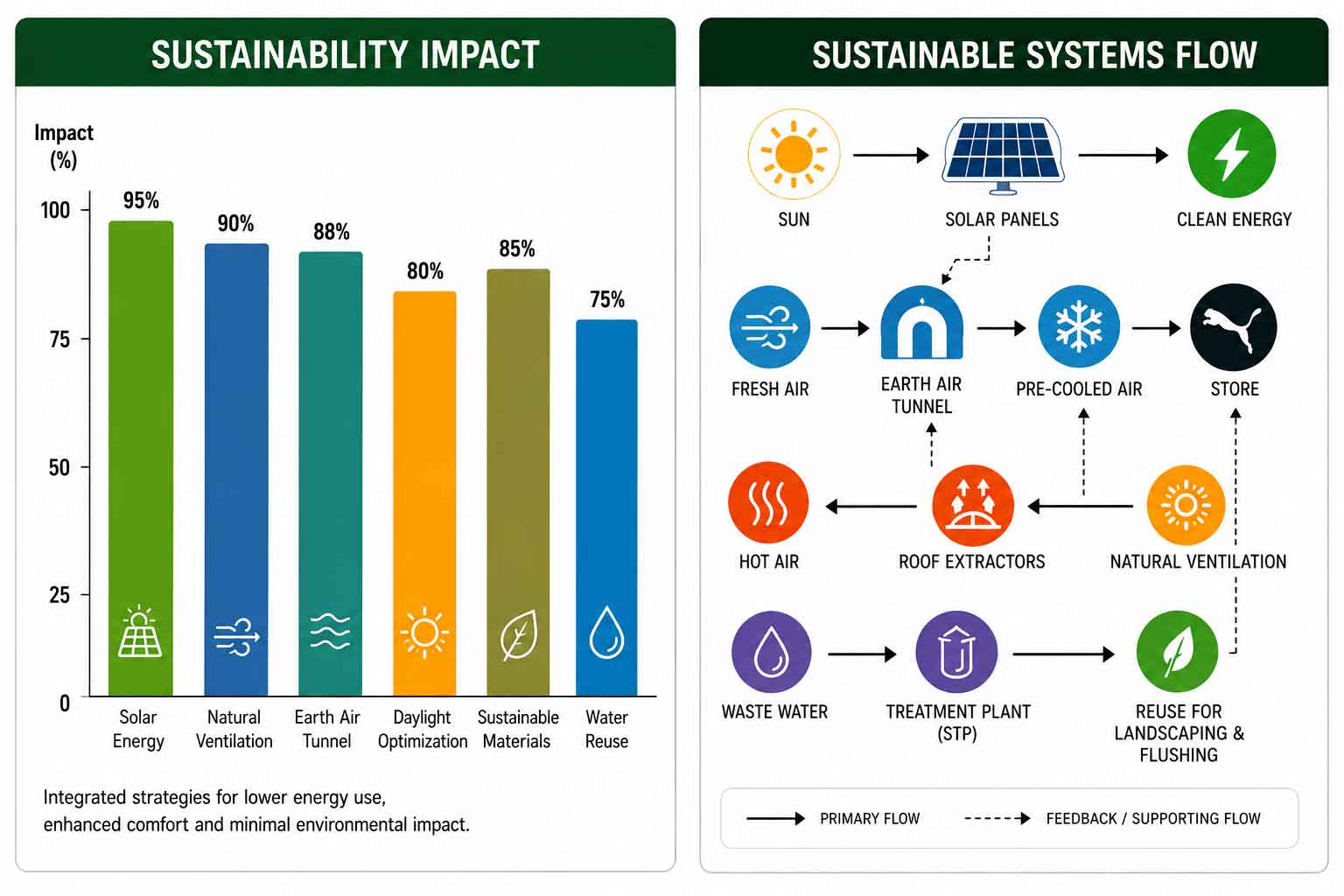
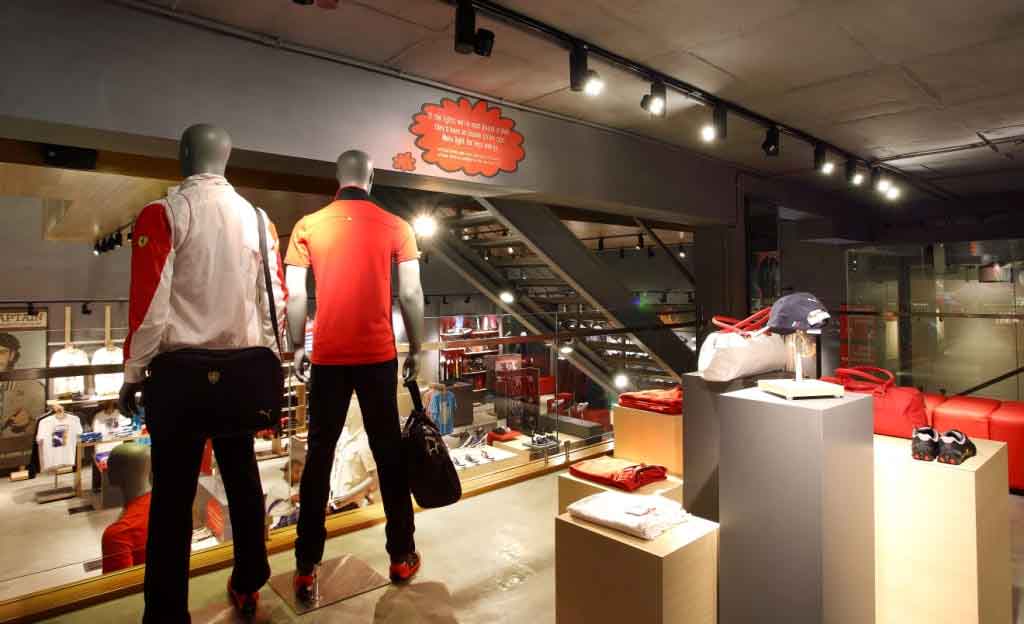

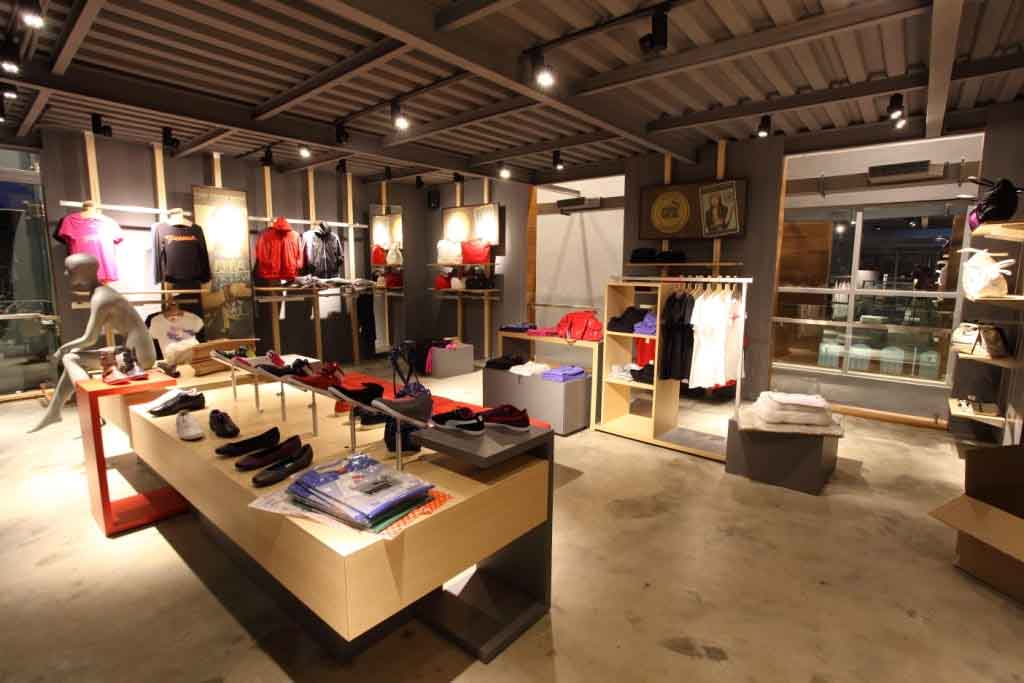
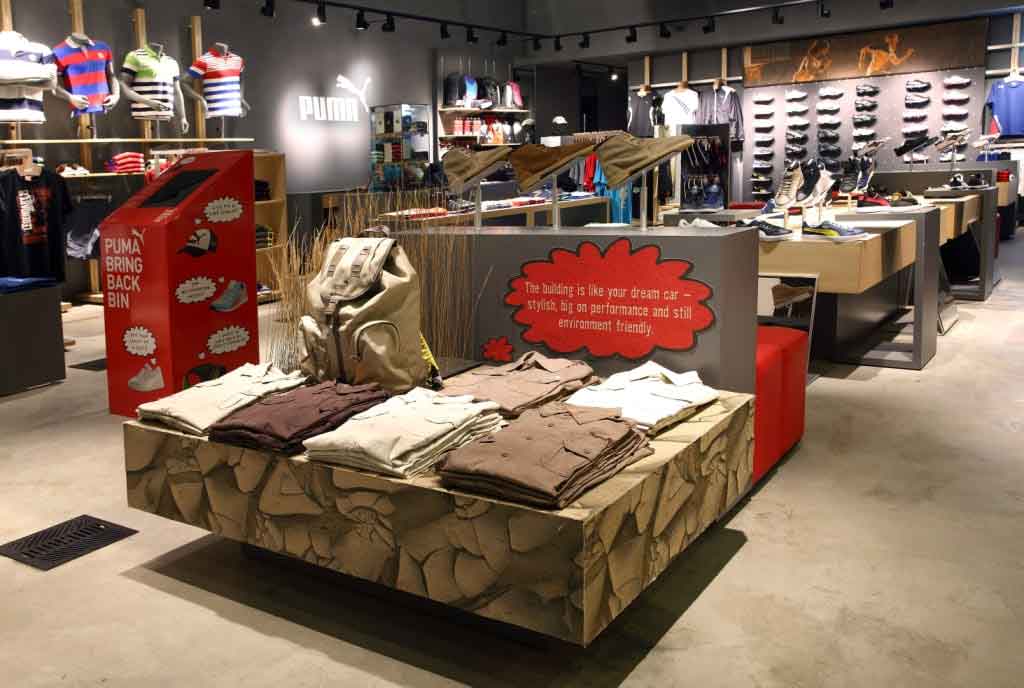
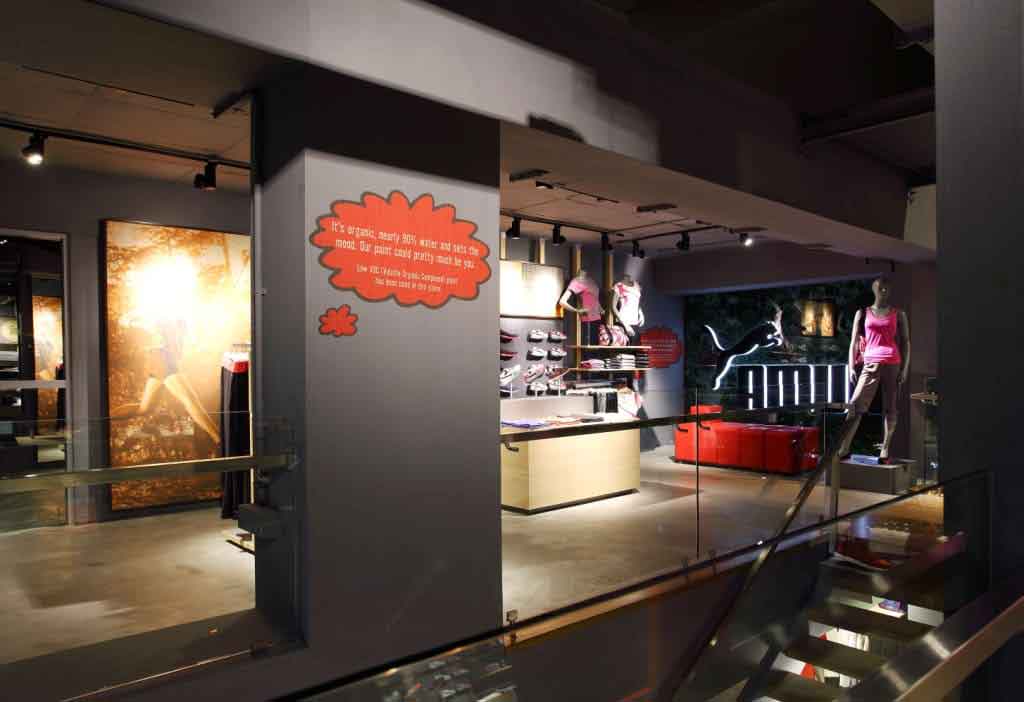

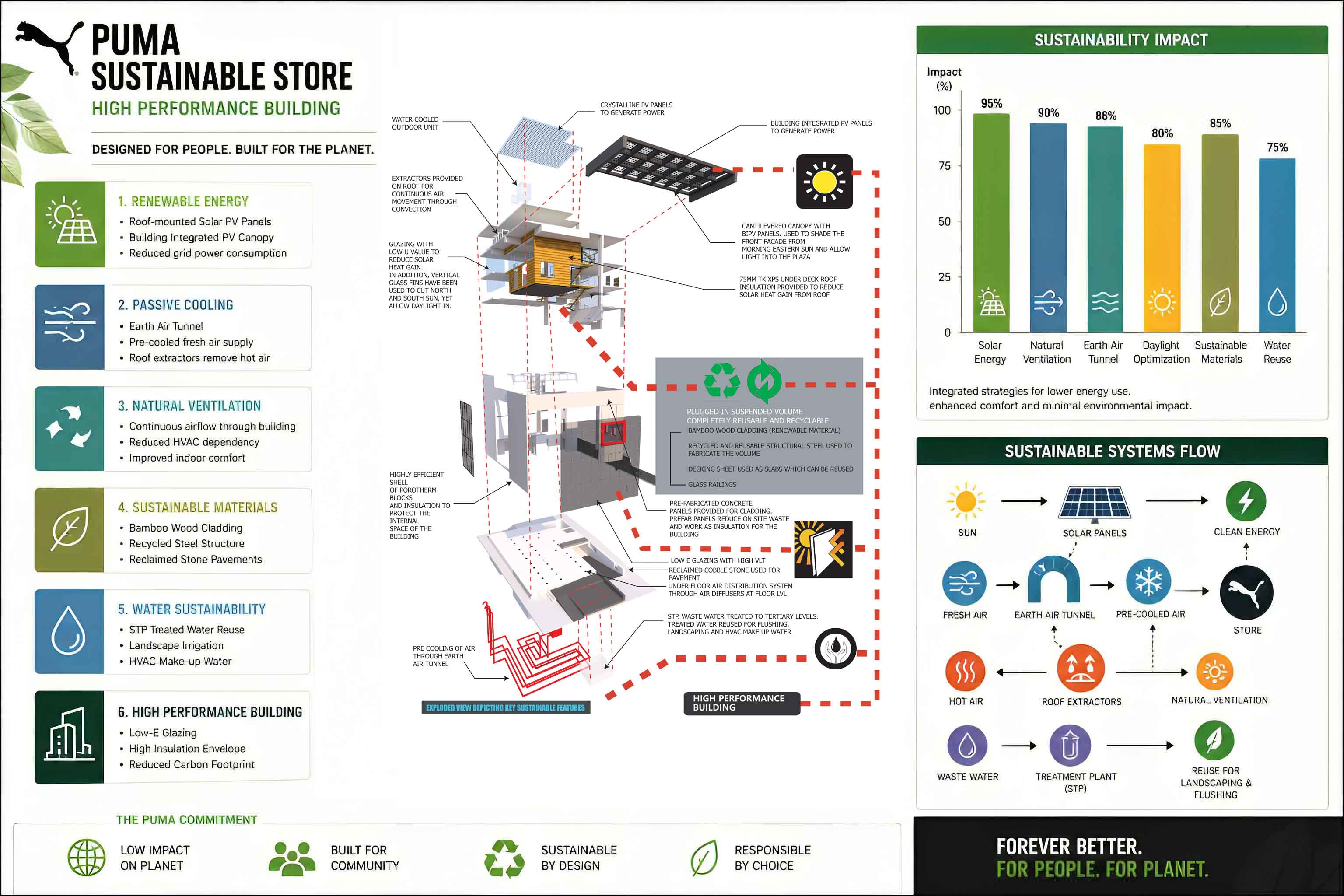
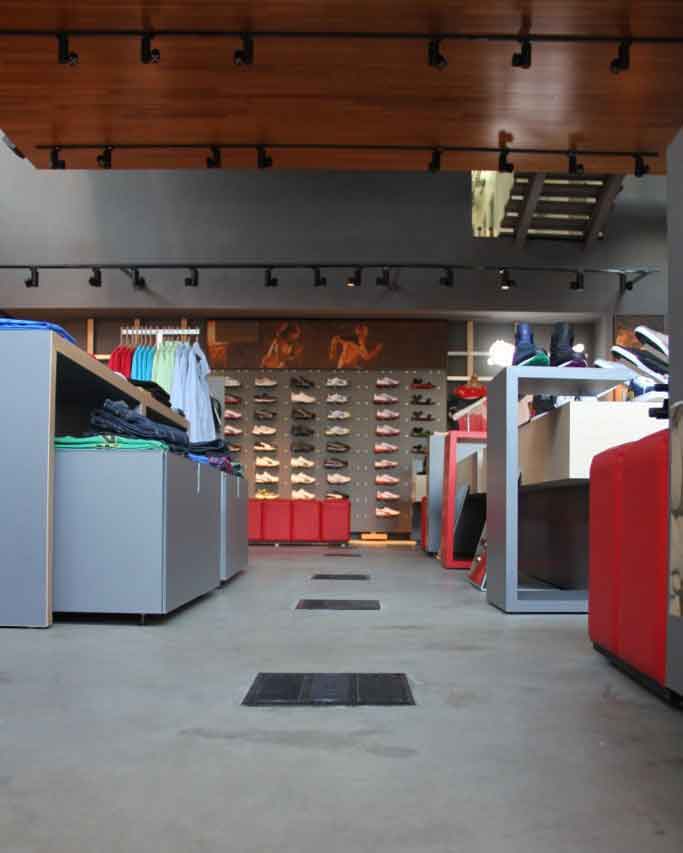
The building has an earth air tunnel installed below the basement which pre cools air before reaching the AHU’s. The building envelope is made of reclaimed clay porotherm blocks which is light weight as well as insulates the internal spaces. Under floor ducting for air conditioning, voids for light and stack effect, recycled steel, extractors on the roof for air draft to maintain comfort, bamboo clad surfaces, water cooled chillers, occupancy sensors, optimizing use of natural light, LED track lights etc. are among many ideas used in the project. Puma India Flagship Store at Bangalore receives a LEED PLATINUM rating and becomes the FIRST RETAIL BUILDING in India to do so.